
Basement flood cleanup starts before anyone goes down there
- Do not step into standing water that has reached outlets, cords, the panel or a furnace.
- Shut the breaker to the basement only if the panel can be reached without standing in water.
- If the water came up through the floor drain, keep children and pets out of the space.
- Photograph the extent before anything is moved or pumped out.
- Do not run household fans in a contaminated space; they spread it through the house.
Three sources that look identical once the floor is wet
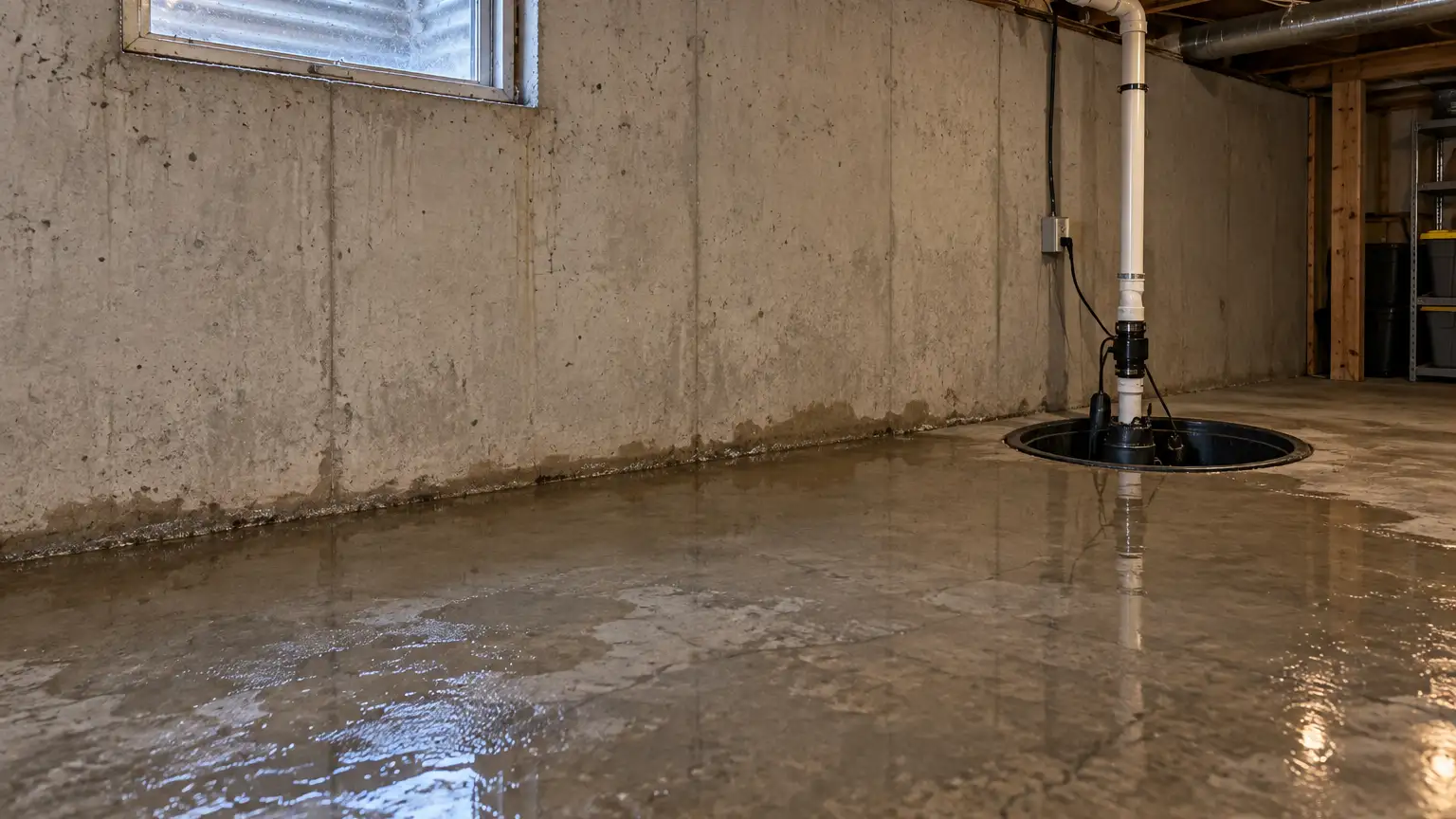
Standing water on a slab tells you almost nothing by itself. Groundwater seepage under pressure comes through the cove joint where the wall meets the floor, through mortar joints in older block, and up around the sump pit lid. A sewer backup comes up the floor drain, the laundry standpipe or a basement toilet. A supply failure comes from above. Establishing which one happened is the first thing done on site, because the three are cleaned under different rules and sit differently with an insurer.
The middle case is common enough here to be worth naming. The Kenosha Water Utility states plainly that sump pumps and downspouts discharging into the sanitary sewer during major rain contribute significantly to flooded basements, and in Racine, homes built before 1955 typically had the footing drain tied straight into the sanitary lateral through a palmer valve. That city now grants up to $5,000 per household to remove it. Where those connections remain, a hard rain reaches the basement through the sewer.
How water gets below grade in southeastern Wisconsin
Wisconsin builds deep. State code requires footings below the frost penetration level or at least 48 inches below grade, whichever is deeper, so a basement floor sits well down in ground that holds water. The clay till across these two counties drains slowly, and backfill against a foundation is looser than the ground around it, so rain runs down the outside of the wall and stays there. After a long soaking the water table reaches the footing, and pressure finds the weakest path: the floor seam, a crack, a window well without drainage, or the pit itself.
Sump pump failure and the discharge line
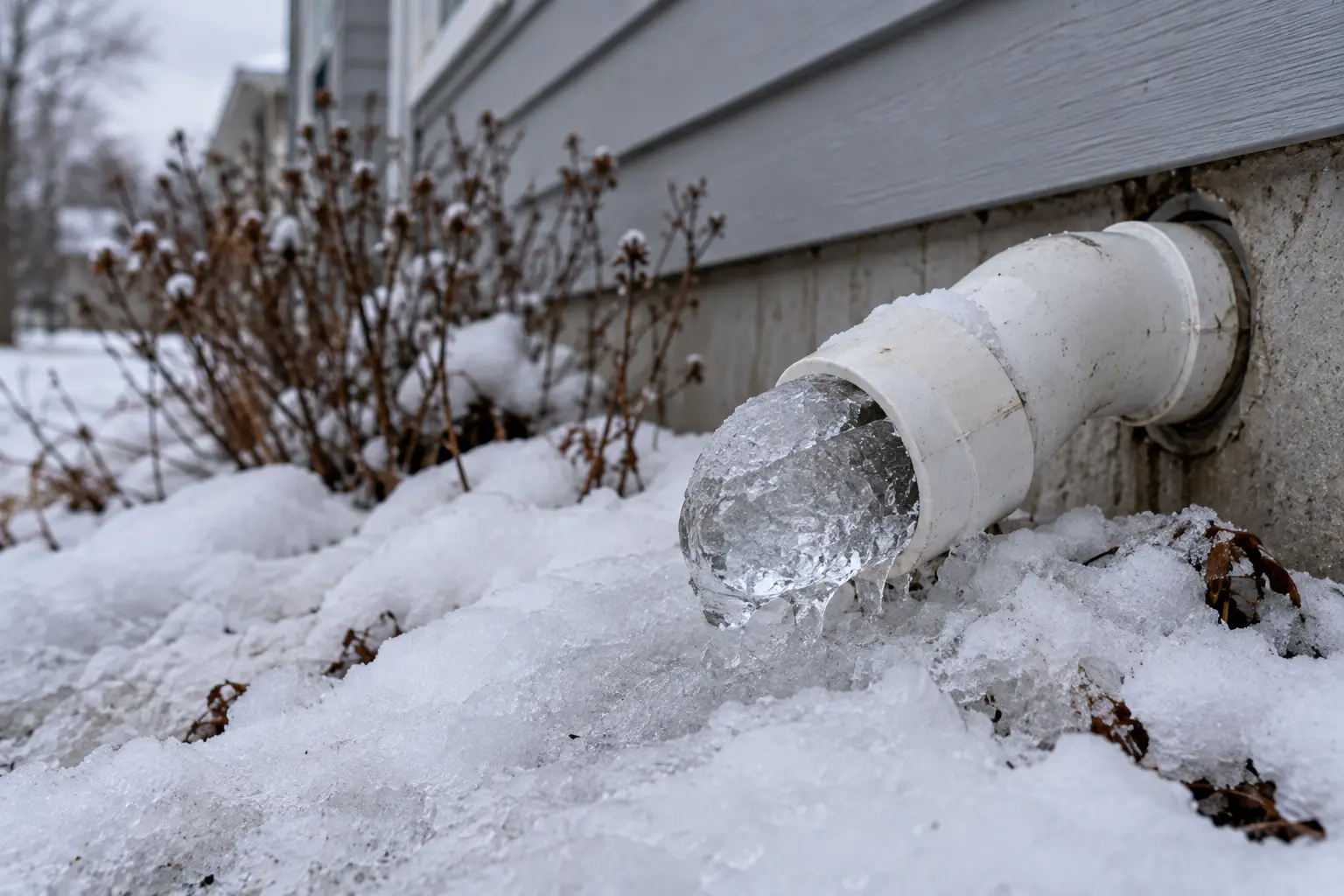
In anything built since about 1970 the sump is not a backup system, it is the drainage system. There is no gravity outlet from the footing drain: the tile runs to a pit, and a pump and a check valve are all that stand between the ground and the slab. Four things break that chain: a power cut during the storm that fills the pit, a jammed float switch, a seized impeller, or a discharge line frozen shut.
Which one it was matters, because it tells you how long the water had been rising before anyone noticed.
What comes out of a finished lower level
Carpet padding comes out almost always: it holds water, dries slowly and keeps the carpet above it wet. Where water was clean and caught early, the carpet itself can often be saved. Plank and laminate over the slab usually come up, because water sits underneath where there is no airflow. Drywall is cut back above the wet line and paneling comes off in a band so the block behind it can dry. Where the water was a sewer backup, everything porous it touched is removed rather than dried.
Stored contents are the part homeowners underestimate. Cardboard, upholstered furniture and paper on a basement floor absorb water quickly, start growing within a couple of days, and keep the humidity of the whole space up while they sit there.
Drying a closed box
Above grade, a dried room exchanges air with the rest of the house. A basement does almost none of that: block or poured walls and a slab on wet ground both give up moisture slowly. Drying below grade therefore leans harder on dehumidification than on air movement, and equipment stays until readings match a dry baseline taken elsewhere in the building. The sequence is set out on the water extraction and drying page, and where the water came back through a drain, the containment rules on the sewage cleanup page apply instead.
Basement flood cleanup in Kenosha County, city by city
- Basement Flood Cleanup KenoshaZIP 53140, 53142, 53143, 53144
- Basement Flood Cleanup RacineZIP 53402, 53403, 53404, 53405, 53406
- Basement Flood Cleanup Mount PleasantZIP 53403, 53405, 53406
- Basement Flood Cleanup Pleasant PrairieZIP 53158, 53142
- Basement Flood Cleanup Salem LakesZIP 53168, 53170, 53179, 53192
- Basement Flood Cleanup Paddock LakeZIP 53168
- Basement Flood Cleanup BristolZIP 53104
- Basement Flood Cleanup SturtevantZIP 53177
- Basement Flood Cleanup Twin LakesZIP 53181
- Basement Flood Cleanup SomersZIP 53171, 53144
- Basement Flood Cleanup BurlingtonZIP 53105
Basement flood cleanup in Kenosha WI: common questions
- How do I tell groundwater from a sewer backup?
- By where it appeared first and what it looks like. Groundwater arrives at the perimeter, works inward from the joint where the wall meets the floor, and is usually clear. A backup starts at the floor drain or a basement toilet and spreads outward, carrying color and odor. The first is a drainage problem, the second a contamination problem, and only the second requires removing everything porous it touched.
- The pump was running the whole time. How did the basement still flood?
- Usually the discharge, not the pump. A line that freezes at the outlet in winter, or ends a few feet from the wall, sends the same water back to the footing drain, so the pit refills as fast as it empties. A stuck check valve does the same. Hearing a pump run is not evidence that water is leaving the property.
- Does a finished basement have to be opened up?
- Part of it, in most cases. Water wicks up drywall and into the bottom plate, sits under carpet pad and stays behind paneling and rigid foam where there is no airflow. Where readings show a wet cavity, a band at the bottom of the wall comes off so the assembly can be dried and inspected. Where the cavity is dry and only the surface was wet, it can often stay.
- How long does drying below grade take?
- Longer than the same loss upstairs. A basement is a closed box with block or poured walls and a concrete slab, all of which release moisture slowly, and it has almost no natural air exchange to carry that moisture away. Three to five days is common for a contained clean-water loss; a saturated block wall or a slab that took standing water can run a week or more.
- Is basement water covered by insurance in Wisconsin?
- It depends on the path the water took. Sudden accidental failures inside the house, such as a supply line or a water heater, are commonly covered. Groundwater through the foundation is normally excluded, and sewer backup and sump pump failure are usually covered only through separate endorsements. Worth reading before the season, not during a claim.