
Before help arrives
- Shut the water off at the fixture or the main if you can reach it safely.
- Keep out of any room where water has reached outlets, cords, or the electrical panel.
- Lift furniture off wet carpet and move what you can to a dry floor.
- Photograph the damage and the failure point before anything is moved.
- Do not use a household vacuum to pick up standing water.
Why the water ends up in the basement in southeastern Wisconsin
These two counties sit on a flat clay lake plain along Lake Michigan that gives way westward to glacial outwash and the kettle lakes around the Fox River. Clay till drains slowly, so a long rain leaves water standing against foundation walls instead of soaking away, and a March thaw on frozen ground sends a week of snowmelt to the low spots in a day. Wisconsin also builds deep: state code puts footings below the frost line or at least 48 inches down, whichever is deeper, and 69 percent of Wisconsin homes have a basement, a larger share than any other state. Deep foundations plus slow soil is why almost every loss here ends up below grade.
Three local specifics shape the rest. The sanitary sewer is the first: the Kenosha Water Utility states plainly that sump pumps and downspouts discharging into it during heavy rain contribute significantly to flooded basements, and in Racine, houses built before 1955 usually had the footing drain tied straight into the sanitary lateral through a palmer valve, which the city now grants up to $5,000 per household to disconnect. The rivers are the second: on 13 July 2017 the Fox River at Burlington crested at 16.5 feet after as much as eight inches of rain, roughly three feet above the previous record. The third is recent. The storms of 13 to 23 April 2026 brought a federal disaster declaration covering both Kenosha and Racine counties.
Emergency water removal in Kenosha County, and what follows it
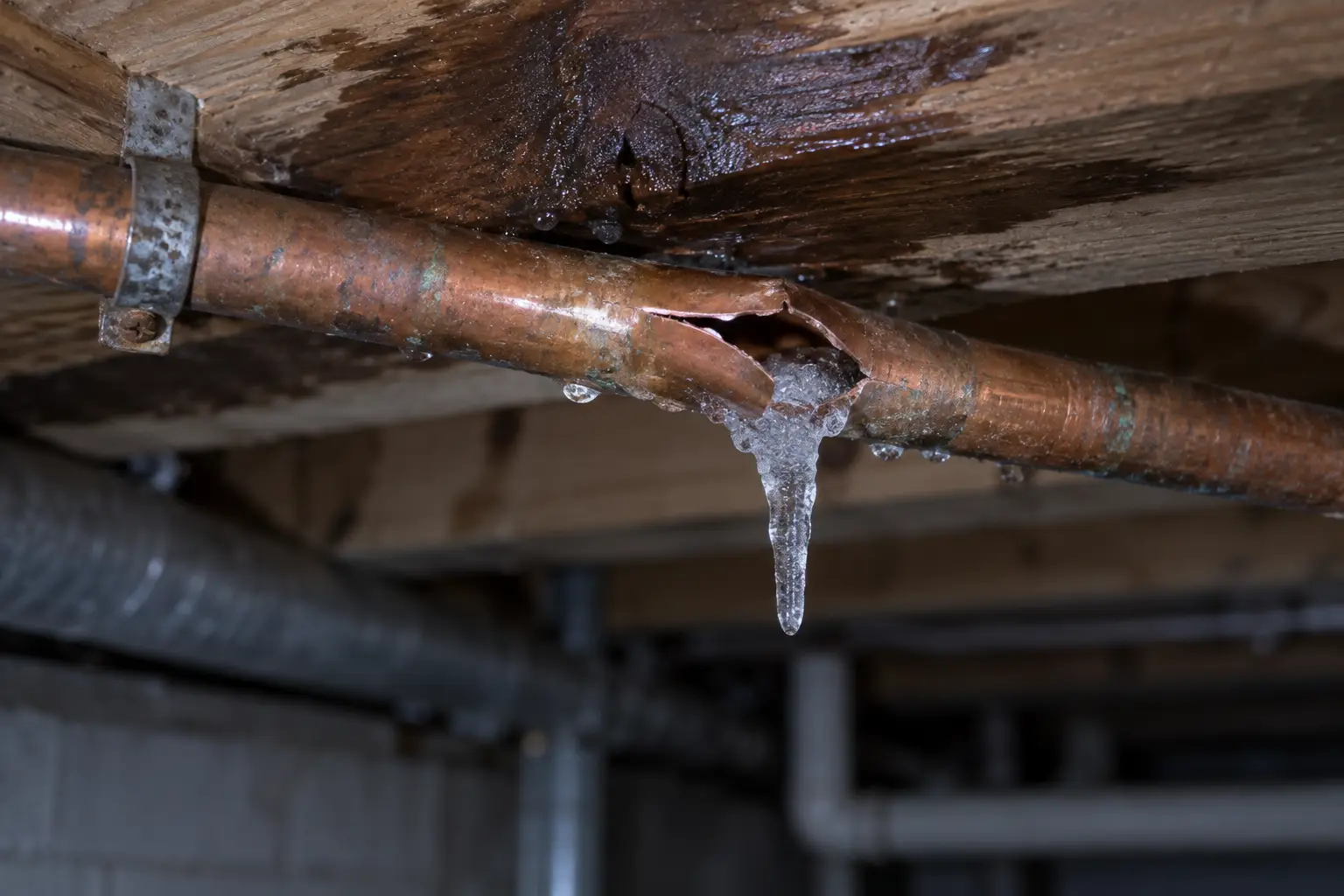
Removing the water you can see is the beginning rather than the end. Water moves by gravity and capillary action into carpet padding, under plank flooring, through baseboard into wall cavities and along framing into rooms that were never wet on the surface. Below grade it has nowhere further to go, so it sits in the block, the slab and the bottom plate while the room above reads dry.
Structural drying starts once the standing water is gone. Extraction pulls water from carpet and padding rather than only off the surface. Air movers break the still layer of air against wet materials so moisture can leave them, and dehumidifiers take that moisture out of the air so it does not settle back into dry materials elsewhere. Meters and thermal imaging locate water inside walls and under flooring, and readings taken across several days show whether materials are genuinely returning to normal. Where water was contaminated, or material has been saturated too long to dry in place, it is removed instead: carpet padding, the lower band of drywall and wet insulation are the usual candidates.
Services
- Water Extraction & DryingStanding water removed and the structure dried under daily moisture readings.
- Basement Flood CleanupSump failures, sewer surcharge and groundwater under the slab and block walls.
- Sewage CleanupContaminated water handled with containment, removal and cleaning.
- Mold RemediationGrowth that established after water sat longer than it should have.
- Burst pipe, supply line and water heater cleanup
- Sewer backup at the basement floor drain
- Sump pump failure and groundwater seepage
- Moisture inspection and mapping
Water damage restoration in Kenosha County and southern Racine County, city by city
- Flooded Basement Cleanup KenoshaZIP 53140, 53142, 53143, 53144
- Water Damage Restoration RacineZIP 53402, 53403, 53404, 53405, 53406
- Water Damage Restoration Mount PleasantZIP 53403, 53405, 53406
- Water Damage Restoration Pleasant PrairieZIP 53158, 53142
- Water Damage Restoration Salem LakesZIP 53168, 53170, 53179, 53192
- Water Damage Restoration Paddock LakeZIP 53168
- Water Damage Restoration BristolZIP 53104
- Water Damage Restoration SturtevantZIP 53177
- Water Damage Restoration Twin LakesZIP 53181
- Water Damage Restoration SomersZIP 53171, 53144
- Water Damage Restoration BurlingtonZIP 53105
Water damage restoration in Kenosha WI: common questions
- How fast can someone reach my property?
- I-94 runs the length of this market, so the lakefront cities and the corridor villages are close together and the western lake communities take longer. The bigger factor is the weather. A storm that surcharges the sewers puts every basement on the same line under water at the same hour, and every provider in both counties is working from the same queue that night. Calling early puts you higher in it.
- What does water damage restoration cost?
- Cost tracks the size of the affected area, how long the water sat, whether the water was clean or contaminated, and how much material has to be removed rather than dried. A contained loss caught within hours is a different job from one that has been spreading for days. Any provider should walk the property and give you a written scope before work begins rather than a number over the phone.
- Is a wet basement always a plumbing problem?
- No, and around here it usually is not. Groundwater under pressure comes through the joint where the wall meets the floor, sewer water comes back up the floor drain, and a supply failure comes from above. The three look similar once there is water on the slab, but they get different handling and they sit differently with an insurer, so the first job on site is establishing which one it was.
- What is the difference between restoration and mold remediation?
- Restoration deals with the water itself: removing it, drying the structure and returning materials to normal moisture levels. Remediation deals with growth that has already established, which needs containment of the work area, controlled removal of affected material and cleaning rather than drying. Water handled early usually prevents the second problem, which is why drying time matters so much below grade.
- Who are the providers on this site?
- They are independent restoration contractors working in Kenosha and Racine counties. This site is not a contractor and does not perform restoration work. It connects homeowners with providers in their area, and it is the homeowner's responsibility to verify that the contractor they hire carries the license and insurance the work requires.